

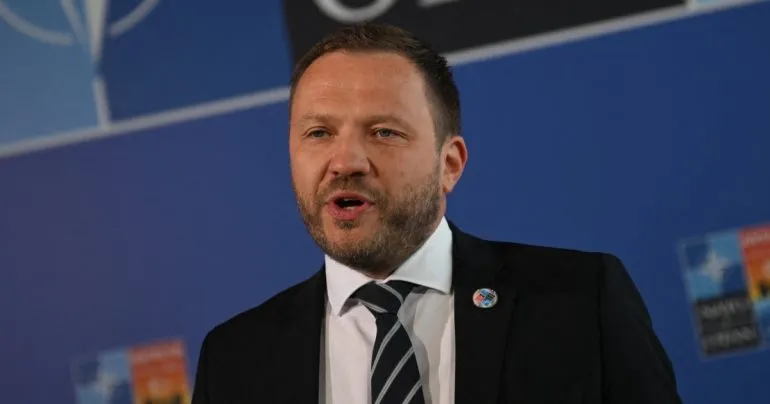
The Estonian government has approved a decision to expand sanctions on the import of liquefied natural gas from Russia. The new restrictions were initiated by Foreign Minister Margus Tsahkna, as reported by the country’s Ministry of Foreign Affairs.
This is reported by Kyiv24
Implementation of a Complete Ban on Gas Imports
Margus Tsahkna submitted a proposal to the government that includes a complete ban on the import and purchase of liquefied natural gas from Russia. Currently, in Estonia, the purchase and import of such gas is only permitted if it is not used in the distribution network.
“As soon as the (proposed – ed.) amendment comes into effect, the import ban will also extend to liquefied natural gas outside the distribution network,” he stated.
According to the new changes, the sanctions will apply to any liquefied natural gas from Russia, regardless of its area of use.
Purpose of the Measures and Impact on the Economy
Tsahkna emphasized that Russia has not abandoned its aggressive intentions and continues military actions against Ukraine, undermining global security. In this regard, Tallinn intends to increase the cost of aggression for the Russian Federation and find ways to reduce the income of its military budget. Similar sanctions will also be extended to Belarus.
The Ministry notes that the ban will come into effect on January 1, 2026. This will give companies and the market ample time to adapt to the new rules and reorganize their operations.
According to the government, the volumes of liquefied natural gas imports from Russia currently remain small, so the implementation of new restrictions will not have a significant impact on Estonia’s economy or business environment.
It is worth noting that the first sanctions on the import and purchase of liquefied natural gas from Russia were introduced in September 2022. At that time, the ban extended to the provision of related gas transmission services and its use in the country’s distribution systems.