

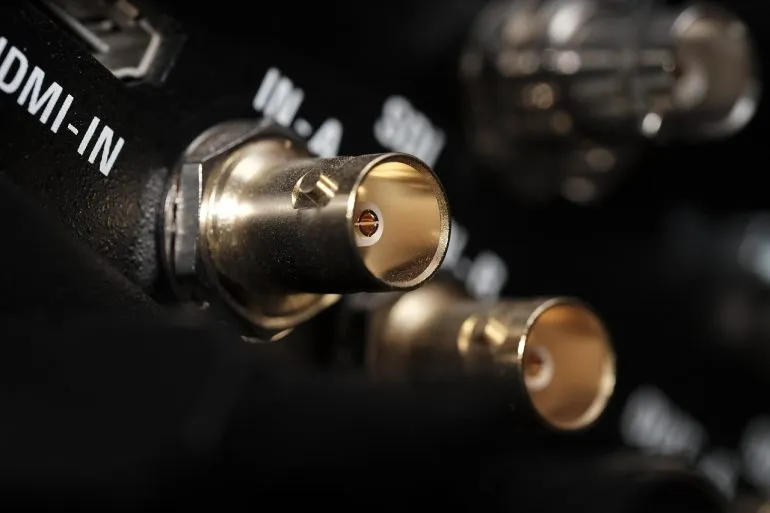
A BNC connector is a compact yet crucial component in any data transmission system. It is used in telecommunications, video surveillance, measuring instruments, and radio frequency installations. Thanks to its convenient bayonet locking mechanism, it ensures quick and stable cable connections, as well as minimal signal loss at high frequencies. Professionals choose proven components, as the stability of the entire system often depends on the connector.
This is reported by Kyiv24
You can find suitable BNC connectors and cables on the website https://selteq.com.ua/ru/bnc/ of the company “Selteq.” Here, you will find products for video systems, radio communications, and laboratory solutions. The range includes standard and angled models, connectors for soldering and crimping, as well as mounting accessories. Therefore, everyone can find the necessary equipment for data transmission here.
What is a BNC Connector?
The name BNC stands for Bayonet Neill–Concelman, named after the engineers who developed this type of connection. The connector has gained widespread popularity due to its simplicity and reliability. Its bayonet mechanism allows for quick securing of the plug in the socket with a quarter turn — effortlessly, yet with a tight contact.
A typical construction includes:
- central contact (conducts the signal);
- dielectric insulator;
- metal housing with a latch;
- contact for the shield (braid).
This design ensures a stable connection even under vibrations and temperature fluctuations, making BNC connectors indispensable in professional installations.
Where are BNC Connectors Used?
BNC connectors are used in various industries, ranging from consumer electronics to industrial systems. Their versatility is explained by their accuracy and ease of installation.
The most common areas of application include:
- video surveillance (CCTV) — connecting analog cameras and video recorders;
- radio frequency devices — antennas, transmitters, receivers;
- laboratory and measuring equipment — oscilloscopes, analyzers, testers;
- communication and telecommunications systems — for data transmission and signal synchronization.
These connectors are compatible with 50 and 75 Ohm coaxial cables, allowing for optimal solutions tailored to specific tasks. For systems where signal stability is crucial, BNC connectors remain one of the most reliable solutions.