

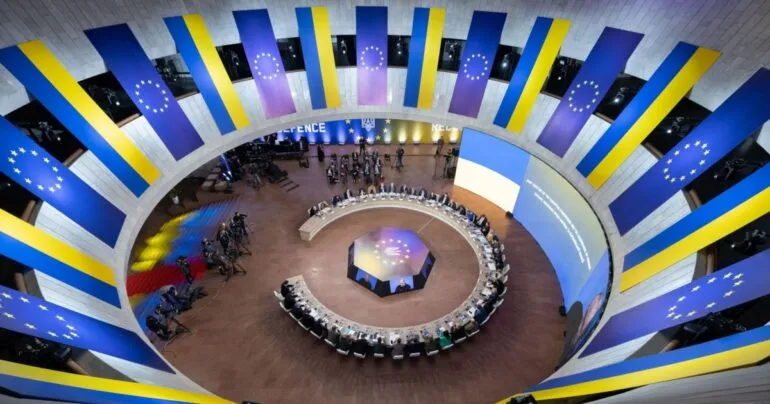
At an informal meeting of the foreign ministers of the European Union countries in the “Gymnich” format in Cyprus, a key issue was the discussion of the possibility of appointing a special EU representative for potential negotiations with Russia regarding the end of the war against Ukraine. Diplomats emphasized the need to maintain the unity of the EU’s position and to increase pressure on Moscow, stressing that the question of a coordinated strategy is more important than the identity of the future negotiator.
This is reported by Kyiv24
Positions of EU foreign ministers on negotiations
Italian Foreign Minister Antonio Tajani emphasized that the European Union must determine a common position, as it will be involved in signing future agreements in any case. He noted that without the EU’s involvement, it is impossible to conclude a peace agreement, and the issue of European sanctions can only be discussed with the participation of representatives from Europe.
“It is impossible to sign an agreement without Europe. Secretary of State Rubio also mentioned during many meetings that Europe will be involved at the end of the negotiations because we will need to sign the agreement. If we want to lift European sanctions, then Europeans must be at the negotiating table,” Tajani stated.
For his part, Spanish Foreign Minister José Manuel Albares believes that ensuring a unified voice of the EU in negotiations is more important than appointing a special envoy. In his opinion, the unity of position will be crucial for the effectiveness of the EU’s actions on the international stage.
Austrian Foreign Minister Beate Meinl-Reisinger expressed support for the idea of appointing a representative, emphasizing that Europe must actively defend its security interests in negotiations. She stressed that the absence of Europeans at the negotiating table could lead to neglect of the EU’s interests.
The foreign ministers of the Baltic states called for caution in discussing specific candidates, focusing on the need to strengthen sanctions against Russia and support Ukraine. Estonian Foreign Minister Margus Tsahkna warned that the discussion about appointing a negotiator could be a “trap” that Putin is trying to draw Europe into.
European politicians on the role of the EU in negotiations with Russia
Lithuanian Foreign Minister Kęstutis Budrys emphasized that now is not the time to discuss the names of potential negotiators, and the main goal should remain a common EU approach. Finnish Foreign Minister Elina Valtonen noted that Europe must be represented in the negotiations, as the simultaneous presence of all 27 member states at the negotiating table is impossible. She expressed confidence in the EU’s ability to agree on candidates who will represent the interests of the Union.
Belgian Foreign Minister Maxime Prevot called on the European Union to take advantage of the pause in US negotiations between Ukraine and Russia to strengthen its positions and ensure participation in future negotiations.
Discussions about the possible appointment of an EU representative intensified after European politicians and media began to put forward names of potential candidates for the role of special envoy. Among the likely contenders mentioned in the press were well-known figures such as Finnish President Alexander Stubb, former German Chancellor Angela Merkel, and former Italian Prime Minister Mario Draghi.