

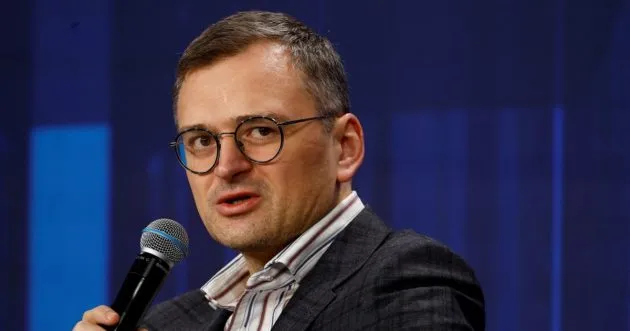
On May 29, a conference titled “Truth in Motion” was held in Prague, initiated by Czech Radio, where journalists and experts discussed current challenges related to disinformation. Among the guests of the Ukrainian panel was former Ukrainian Foreign Minister Dmytro Kuleba, who shared his own experience negotiating with representatives of the Russian Federation.
This is reported by Kyiv24
Strategies of Russian Diplomacy During Negotiations
Dmytro Kuleba emphasized the distinctive characteristics of Russian diplomats’ tactics. According to him, the Russian side pays heightened attention to details and is capable of engaging in discussions about minutiae for hours, often modeling various scenarios. One of the main goals of such tactics is to drive negotiations into a deadlock. If the Russian delegation has no intention of reaching agreements, they break the process into numerous stages, creating the appearance of constructive work.
“Russian diplomacy is known for its attention to detail. They love to discuss details for hours, modeling different scenarios. If they aim to drive negotiations into a deadlock, rest assured, they will engage in endless discussions about details. Secondly, if the Russian delegation wants to not reach an agreement but to simulate a willingness to negotiate, they will propose breaking any process into many stages,” said the former Foreign Minister.
The Confidence of Russian Negotiators and Information Warfare
Kuleba highlighted that since 2014, Russian negotiators have consistently demonstrated confidence in Moscow’s ability to achieve its own goals. They have never allowed themselves to doubt the success of their intentions, unlike Western diplomats.
Also participating in the conference was writer and journalist Peter Pomerantsev, who emphasized the hybrid nature and dangers of Russia’s information warfare against Ukraine and Western countries. He cited the example of the detention of Ukrainians on suspicion of arson related to the British Prime Minister, noting that such actions have a pronounced informational component. According to Pomerantsev, Russia can use Ukrainians to organize attacks in Europe, combining intimidation and attempts to discredit Ukrainian refugees in the eyes of Europeans.
On May 16, negotiations took place in Istanbul between Ukraine and the Russian Federation, led by Russian presidential aide Vladimir Medinsky. The delegation also included Deputy Foreign Minister Mykhailo Galuzin, head of the Main Directorate of the General Staff of the Armed Forces of the Russian Federation Igor Kostyukov, Deputy Defense Minister Alexander Fomin, and four “experts.”
Although the parties did not achieve significant progress, they managed to agree on a prisoner exchange in the format of “one thousand for one thousand,” which was implemented on May 25. This marked the first negotiations in three years between representatives of Ukraine and the Russian Federation. Kyiv insisted on the introduction of a 30-day ceasefire; however, the Russian Federation continues to insist on recognition of its sovereignty over four Ukrainian regions that it does not fully control. Moscow sets this condition as a prerequisite for starting discussions on a ceasefire.