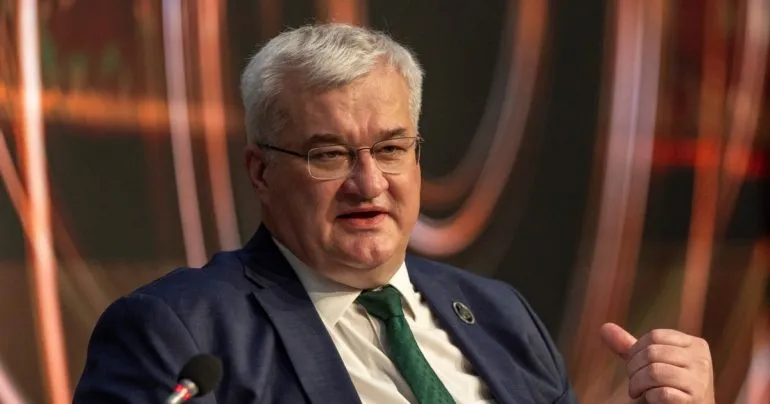
Ukraine is actively discussing the future role of Europe in resolving the war, which is currently in a pause stage. In the near future, President Volodymyr Zelensky plans to raise this issue at negotiations in the E3 format, which includes France, the United Kingdom, and Germany. This was reported by the head of the Ministry of Foreign Affairs of Ukraine, Andriy Sybiha.
This is reported by Kyiv24
The Future of the Peace Process and Europe’s Position
According to Sybiha, Europe’s role in the peace process is defined in close coordination with Ukraine. Europe possesses powerful tools of influence, including sanctions and frozen assets, which can provide new momentum towards achieving a sustainable and just peace. Sybiha emphasized that there is currently an active discussion regarding the format and mandate of the participants in the upcoming negotiations.
“This is being decided jointly with us, discussed, and we will define these parameters of Europe’s role in the peace process. And I personally believe that this will add new dynamics, and Europe has this toolkit – sanctions, frozen assets. Europe can be a strong player in the peace process or again – bring closer a sustainable just peace.”
The minister clarified that various options are currently being considered: whether it will be a group of countries, individual leaders, or a specially created mechanism. The final model has not yet been agreed upon.
The Issue of Mediation and Warnings Against Separate Contacts
In response to a question about potential mediators, Sybiha confirmed the existence of certain names but emphasized that this issue remains in the realm of diplomatic consultations. The minister categorically rejected the possibility of involving individuals such as Gerhard Schröder, Gérard Depardieu, or Steven Seagal in the negotiations, and also expressed concern about the potential involvement of former Hungarian Prime Minister Viktor Orbán.
Sybiha emphasized that discussions regarding the format and composition of the negotiating group should not be prolonged. He also warned European countries against attempts to conduct separate negotiations with Moscow, which, according to the minister, could lead to the disunity of Europe, something the Russian Federation seeks.
Earlier this month, EU representatives and European diplomats sharply criticized the idea of appointing former German Chancellor Gerhard Schröder as a mediator in the negotiations regarding Ukraine. This reaction came in response to Putin’s statement, who called Schröder “the best candidate” for the role of negotiator between the EU and Russia.
German Minister for Europe Günther Krichbaum emphasized that a mediator must be acceptable to both sides and noted that there is “clearly already a problem” in this matter.
Gerhard Schröder, who served as Chancellor of Germany from 1998 to 2005, after his political career headed the supervisory board of the Russian state company Rosneft. After the start of the full-scale war of Russia against Ukraine, Schröder remained in contact with Putin and did not condemn the aggression. The former chancellor has repeatedly visited Moscow, meeting with the leadership of the Russian Federation, including discussing energy issues and the export of Russian oil and gas to Europe. His actions have drawn sharp criticism in Germany.
In 2025, Schröder publicly supported the Nord Stream project, stating that he sees no reason to break the “proven cooperation” with Russia in the energy sector, initiated by his predecessors.