

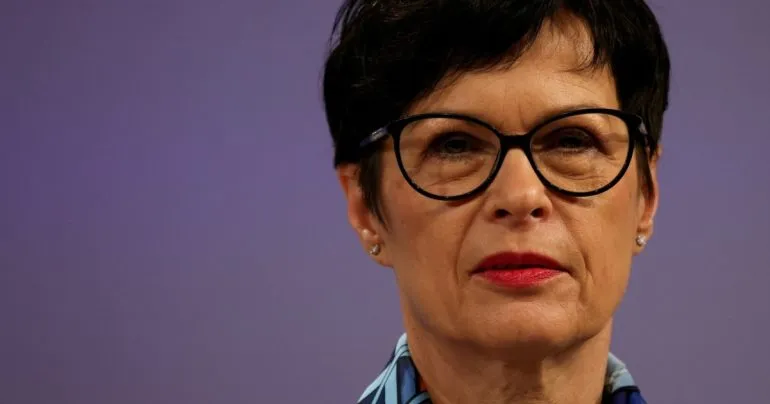
The European Commissioner for Enlargement, Olivér Várhelyi, reported potential progress in the negotiations regarding Ukraine’s membership in the European Union due to the changing political situation in Hungary. According to her, the new leadership of this country is demonstrating positive signals regarding support for Ukraine’s Euro-integration aspirations.
This is reported by Kyiv24
Prospects for Unblocking Negotiations and Loans
Olivér Várhelyi emphasized the difference between the approaches of the current and future governments of Hungary: currently, there is a possibility of moving forward regarding the €90 billion loan, and with the new government, the European Commission hopes to activate the membership negotiation process for Ukraine. She expressed confidence that the first negotiation cluster for Ukraine will soon be opened, which will be an important step towards full membership.
“With the current government of Hungary, it is possible to move forward regarding the €90 billion loan. With the new government, we hope to advance in the accession process. We have heard some positive signals from the future Prime Minister of Hungary, and that is the difference now… I am confident that we will be able to officially open the first negotiation cluster very soon, and then all the others,” Várhelyi noted.
Discussion on Gradual Membership and Integration
Regarding the possible gradual integration of Ukraine into the EU, proposed by France and Germany, Várhelyi confirmed that discussions are ongoing among member states about various formats of accession. In particular, the option of initial membership without voting rights and access to EU financial funds is being considered. The Commissioner emphasized that the principle of gradual integration is already being successfully applied in the economy — in the areas of roaming, the Single Euro Payments Area (SEPA), and energy. According to her, the European Commission is exploring the possibilities of expanding this approach to other areas of cooperation.
After the recent parliamentary elections in Hungary, the leader of the “Tisza” party, Péter Madjar, announced his readiness to lift the veto imposed by Prime Minister Viktor Orbán on providing Ukraine with a €90 billion loan. At the same time, he emphasized that Hungary will not take financial responsibility for this loan and opposes the accelerated accession of Ukraine to the EU. Furthermore, Péter Madjar linked the normalization of relations with Kyiv to the observance of the rights of the Hungarian minority in Ukraine.