
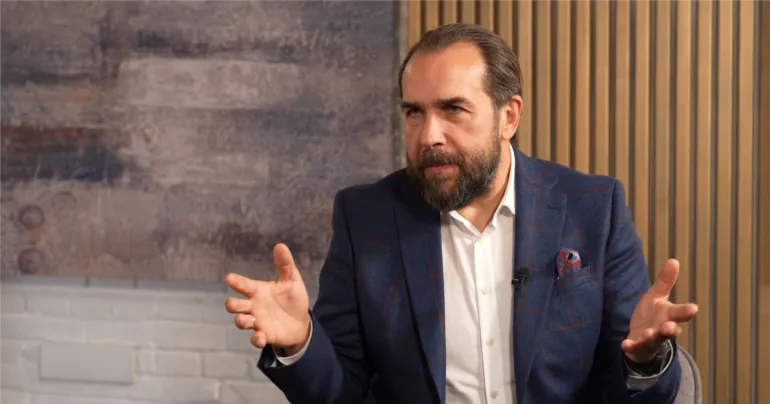
Poland advocates for a simultaneous eurointegration process for Moldova and Ukraine. This position was expressed by Piotr Lukasiewicz, the acting chargé d’affaires of Poland in Ukraine. The diplomat emphasized that Warsaw does not support the idea of separating the paths of these states towards membership in the European Union, but insists on parallel negotiations for both countries with the EU. According to Lukasiewicz, Poland has maintained this position during its presidency in the European Union.
This is reported by Kyiv24
Ukraine is Undergoing the Eurointegration Process Faster than Poland
The diplomat noted that Ukraine is demonstrating a high pace of transformation in accordance with EU criteria. He cited the example of Poland, which negotiated its membership for ten years — from 1994 to 2004, while Ukraine is progressing significantly faster. Lukasiewicz stressed that this is not due to any special privileges, but rather thanks to the rapid pace of reforms and the adaptation of legislation to European standards.
“Ukraine is going through this process very quickly not because it has any special privileges, but because it is rapidly transforming its state, adapting it to the requirements of EU membership. And this should be noted — the Ukrainian enthusiasm for the European Union is very high, and the European Commission is responding to this by advancing the process quickly.”
Lukasiewicz emphasized that the European Commission is the only body negotiating with Ukraine on the terms of membership, while Poland, like other EU countries, presents its interests to the European Commission.
Challenges in the Negotiation Process and Hungary’s Role
The Polish diplomat also pointed out an obstacle that has arisen due to Hungary’s position. This is not about opposing Ukraine’s EU membership, but about blocking one stage of the negotiation process. Lukasiewicz expressed hope that consensus within the EU will allow overcoming this problem, enabling Ukraine to open its negotiation clusters.
He is convinced that Hungary will eventually lift its blockade, and Ukraine will continue its path towards full membership. At the same time, the diplomat noted that negotiations with Brussels are ongoing even without the formal opening of negotiation clusters.
According to him, if a political decision is made within six to seven years, the terms of Ukraine’s EU membership will align with the interests of both member states and Ukraine itself.
There are 35 negotiation chapters in the EU, grouped into six clusters: fundamentals (basic areas), internal market, competitiveness and inclusive growth, green agenda and sustainable connectivity, resources, agriculture and cohesion, as well as external relations. To become a member of the EU, a country must harmonize its legislation across all these areas, and each of the 27 member states must ratify this decision.
During Poland’s presidency in the EU Council this year, the opening of one to three negotiation clusters for Ukraine was anticipated, but this has not yet occurred. Consensus is necessary at all stages, including when opening clusters.
Lukasiewicz emphasized that Ukraine’s membership in the EU would facilitate the rapprochement of the two countries and assist in addressing sensitive issues, particularly regarding historical past.
He noted that any negotiations — economic, political, military, agricultural, or concerning language and culture — are embedded within the framework of the European community, carrying a different meaning and perspective than bilateral discussions without such a framework.