

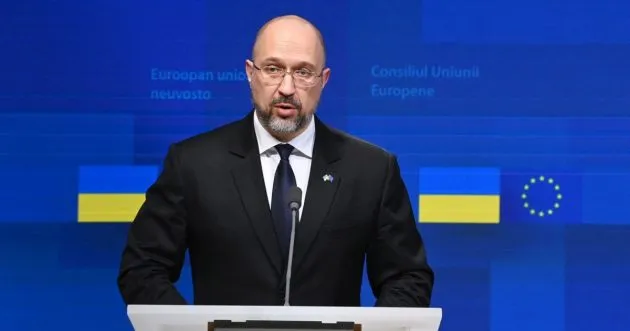
Prime Minister Denys Shmyhal held a meeting with ambassadors from European Union countries, during which issues of coordinating actions to counter Russian aggression and expanding support for Ukraine were discussed. He reported this on his Telegram channel.
This is reported by Kyiv24
Call for Strengthening Sanctions and Supporting Ukraine
According to Shmyhal, Ukraine currently especially needs increased military, financial, and humanitarian assistance due to new attacks from the Russian Federation. The Prime Minister emphasized the necessity of further sanctions pressure on the Russian economy, particularly in sectors such as metallurgy, nuclear and chemical industries, the IT sector, and finance.
“I raised the issue of sanctions against the aggressor. I thanked for the adoption of 17 sanction packages. It is important to increase pressure on the Russian economy, particularly in sectors such as metallurgy, nuclear and chemical industries, the IT services sector, and finance. A fundamental issue is the confiscation of frozen Russian assets,” Shmyhal stated.
Mechanism for Using Frozen Assets and New Initiatives
The head of the government expressed gratitude to the G7 countries and the European Union for launching the ERA mechanism, which will allow the use of frozen Russian funds to support and rebuild Ukraine. Shmyhal also reported on the key priorities of the Cabinet of Ministers, including economic stability, business support, country reconstruction, and strengthening the defense industry. He emphasized the importance of starting negotiations on clusters within the framework of Eurointegration as soon as possible.
Additionally, the Prime Minister noted that Ukraine is counting on further cooperation with EU member states within the framework of the new financial instrument SAFE, amounting to 150 billion euros, aimed at meeting the country’s defense needs.
It is worth noting that on June 10, the European Commission presented proposals for the 18th sanctions package against the Russian Federation. Among them are a ban on transactions related to the “Nord Streams,” restrictions on the import of petroleum products from Russian raw materials, and a reduction of the price cap on oil to 45 dollars per barrel.