
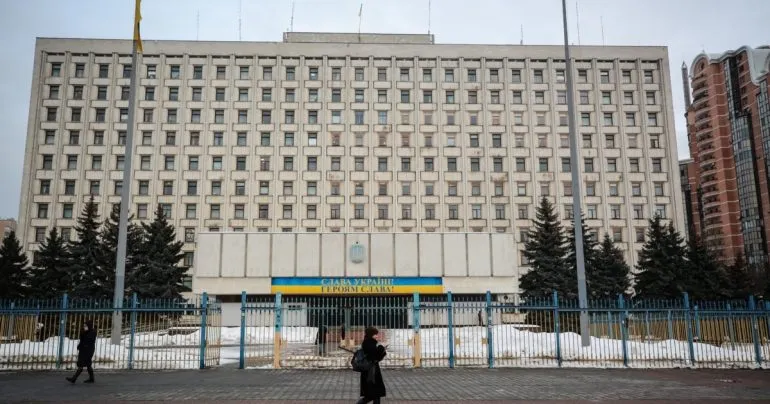
Deputy Head of the Central Election Commission, Serhiy Dubovyk, stated that the format of the telethon ‘Unified News’ does not fully comply with the requirements of the electoral process and the standards for conducting an election campaign. He expressed this opinion during a broadcast while commenting on the possibility of organizing elections under martial law.
This is reported by Kyiv24
Need for Legislative Changes for Media During Elections
Dubovyk emphasized that the current legislation regarding martial law and the sections of the Constitution that regulate the protection of fundamental rights and freedoms of citizens contain specific requirements for elections, including citizens’ voting rights and the standards for organizing the electoral process. He noted that the format of the ‘Unified Marathon’ is an issue that requires separate regulation in light of adherence to democratic standards.
“This is also a matter of adhering to standards, as the existence of the ‘Unified Marathon’ format does not quite correspond with the election campaign and the electoral process,” he said.
According to the Deputy Head of the CEC, resolving the issue of elections is not limited to the legal aspects of martial law, but requires a comprehensive approach and legislative changes. This is especially true for ensuring the possibility of free radio and television broadcasting.
Safety and Access to Information for Citizens
Dubovyk pointed out that certain restrictions are currently in place due to the threat of hostile propaganda, and at this stage, all state bodies adhere to the adopted decisions. In his opinion, if an election campaign begins, these restrictions may be reviewed, but only if the security situation improves. He stressed the need to guarantee freedom of expression through traditional media for all citizens, including those who do not use social networks or do not have internet access. Candidates for elected positions should be able to openly express their positions.
At the same time, Dubovyk emphasized that the easing of existing restrictions is only possible under appropriate security conditions. If the security situation remains complex, the lifting of restrictions will not be considered.
Since the beginning of Russia’s full-scale invasion of Ukraine in February 2022, leading domestic television channels have been broadcasting a joint information marathon, created in collaboration with government representatives, aimed at informing the population in crisis conditions.
A study by the Kyiv International Institute of Sociology conducted last year showed a trend of declining trust in the ‘Unified News’ telethon. In December 2023, 43% of surveyed Ukrainians trusted this format, while 38% did not. By early February 2024, trust had decreased to 36%, while the share of those who do not trust it increased to 47%.
The report by the European Commission on Ukraine’s compliance with the conditions for starting negotiations on EU membership also emphasized the importance of restoring an independent media landscape.