

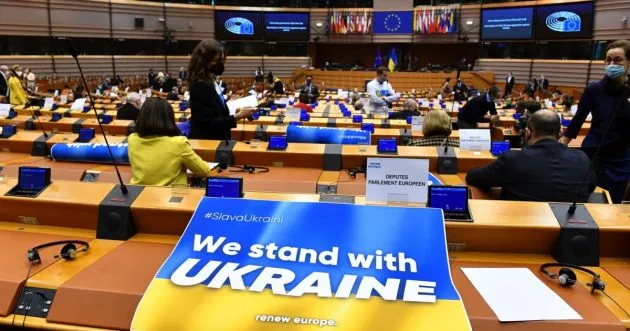
The European Commission has initiated a proposal to extend the temporary protection period for Ukrainian citizens who have been forced to leave their country due to the full-scale aggression of the Russian Federation. According to the proposal, the protection is set to be extended for another year—until March 4, 2027. The European Commission explains this decision by stating that “Russia continues its illegal attacks, and the situation in Ukraine remains unstable.”
This is reported by Kyiv24
Rights and Opportunities for Ukrainians in the EU
The document emphasizes that the extension of temporary protection guarantees legal certainty for both Ukrainians and EU member states, ensuring the application of uniform standards across all member states. This allows displaced persons to remain under protection without the need to apply for international protection or submit new asylum applications.
“This will provide legal certainty for those benefiting from temporary protection and for member states, ensuring that the same protection standards will continue to apply throughout the EU. It will also reassure displaced persons from Ukraine that applying for international protection is not necessary and not required,” stated the European Commission.
At the same time, in the event of a significant improvement in the security situation in Ukraine that would allow its citizens to return, the Commission reserves the right to propose an early termination of temporary protection—before the specified date. This issue may be brought before the EU Council.
Next Steps and Adaptation After Protection Ends
The European Commission also clarifies the options available to Ukrainians after the temporary protection period ends. Member states will receive appropriate recommendations, which are not mandatory to implement. Among these is the possibility of transitioning to other legal grounds for residence in the EU: residence permits based on employment, education, research, or long-term resident status. In fact, this returns to pre-war rules under which Ukrainians could obtain work or student visas.
Particular attention is given to the need for integration: it is recommended to support language learning, obtaining European education, and employment. Individuals considering the possibility of returning to Ukraine will be able to take advantage of familiarization visits to make an informed decision about repatriation.
To support Ukrainians in member states, the establishment of unity centers is proposed, which will serve as informational and consulting platforms for integration and return to Ukraine. The funding for such centers will be provided by the European Union, and a special envoy for Ukrainian matters in the EU is planned to be appointed to coordinate this process.
The final decision on the extension of temporary protection will be made by the EU Council, which will convene for a meeting of interior and justice ministers in Luxembourg on June 12-13.