

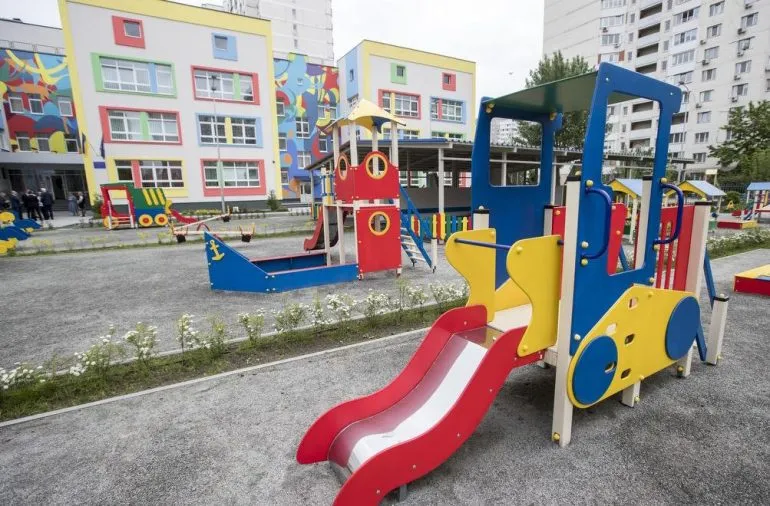
Birth rates in Ukraine have significantly decreased, leading to substantial changes in the occupancy of kindergartens.
This is reported by Kyiv24
In the context of a demographic crisis, many preschool institutions across the country remain half-empty. This has even affected the capital, where, for the first time in the history of independence, it has been possible to provide a place in a kindergarten for every child in need.
The situation with waiting lists for kindergartens in Kyiv and the regions
In Kyiv, the issue of overcrowded kindergartens is no longer as pressing as it once was. Currently, the capital has recorded an absence of a shortage of places in most preschool institutions. However, in some areas with a high number of young families and a dense population, waiting lists still exist, as parents wish to enroll their child in a specific kindergarten. A similar situation is observed in the satellite cities of Kyiv — Irpin, Vyshhorod, and Bucha. Here, waiting lists persist mainly due to the significant number of internally displaced persons and a steady birth rate.
“The issue of overcrowded kindergartens is no longer being discussed. And for the first time in the history of independence, Kyiv can provide a place in a kindergarten for every child. Yes, there are waiting lists for some kindergartens, often in densely populated areas where many young families want to enroll their child in a specific institution. Waiting lists remain in the satellite cities — Irpin, Vyshhorod, Bucha. There are many IDPs there. And, thank God, children are being born there,” said the official.
Statistics and challenges for preschool education
Currently, there are about 881,000 children aged 3 to 6 years in Ukraine and only 570,000 children under three years old. According to forecasts, over the next three years, the number of children aged 3 to 6 years may decrease by another 200,000. This decline is equivalent to the closure of two thousand large kindergartens, which poses significant challenges for the preschool education system.
<p>In the vast majority of kindergartens, there are up to six groups, so maintaining the network of institutions becomes a strategic task for the state. Educators warn against mass closures or repurposing of kindergartens, as happened in the 1990s, to avoid a shortage of places in the event of a rise in birth rates in the future.
“In the next three years, this will be a huge challenge. In the next three years, Ukraine will see a decrease of 200,000 children aged 3 to 6 years. To understand, 200,000 children is equivalent to two thousand large kindergartens. And most of our kindergartens are actually small, with up to six groups of children. We need to preserve the network of preschool institutions because we expect a rise in birth rates. We cannot do as we did in the nineties when everything was closed and handed out, and then more children started to be born and waiting lists formed from birth,” noted Konovalova.
In the current conditions, the main task is to support the existing network of preschool institutions to ensure comfortable conditions for children in the future, regardless of changes in the demographic situation.