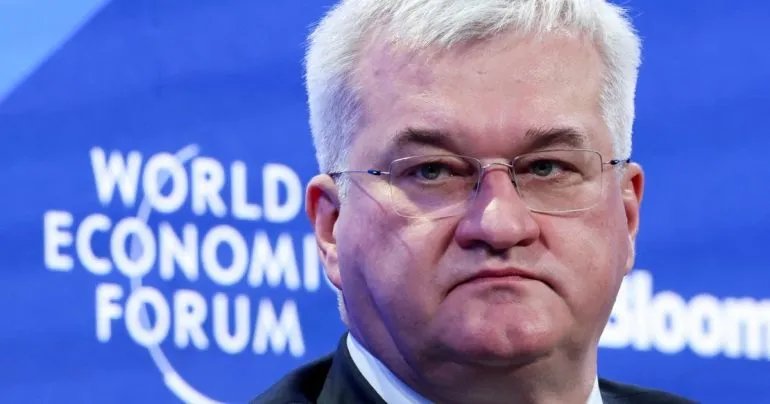
The Minister of Foreign Affairs of Ukraine, Andriy Sybiga, publicly responded to the statement of Hungarian Prime Minister Viktor Orban, who questioned the obvious fact of Russia’s aggression against Ukraine, stating that “it is unclear who attacked whom.” Sybiga reminded Orban of Hungary’s historical role in the events of World War II.
This is reported by Kyiv24
Orban’s Statements and the Ukrainian Response
Viktor Orban criticized the idea of the European Union using frozen Russian assets to fund aid to Ukraine. In his opinion, such a move could be equated to declaring war on Moscow. Commenting on the EU’s position, Orban noted that the leaders of the bloc’s countries “calmly have breakfast at home, drink coffee, and think about how morally right it is to help a small country that has been attacked. Of course, it is not that small, and it is even unclear who attacked whom; in any case, we are currently helping a country that has suffered violence, and it costs us nothing. But in the end, they will pay.”
“They (the leaders of the leading EU countries – ed.) calmly have breakfast at home, drink coffee, and think about how morally right it is to help a small country that has been attacked. Of course, it is not that small, and it is even unclear who attacked whom; in any case, we are currently helping a country that has suffered violence, and it costs us nothing. But in the end, they will pay.”
In response, Andriy Sybiga wrote that the Hungarian leadership’s position on the war is as “unclear” as it was in 1939, hinting at Budapest’s actions during World War II.
Historical Context and Further Reaction
The Hungarian Minister of Foreign Affairs, Peter Szijjarto, reacted to Sybiga’s words, calling for an end to the insults and emphasizing that Hungary will not allow itself to be drawn into the war.
For most of World War II, Hungary acted as an ally of Nazi Germany. In 1939, the country partially resisted this course; however, by September 1940, it joined the Tripartite Pact with Germany, Italy, and Japan, and on November 20 of the same year, it officially became a participant. Hungarian troops participated in the invasion of Yugoslavia and engaged in combat against the USSR on the Eastern Front, suffering significant losses.
As Germany’s defeat approached, Hungary’s regent, Miklós Horthy, attempted to withdraw the country from the war by initiating secret negotiations with Great Britain. In 1944, his attempt to exit the war led to the occupation of Hungary by German forces.