

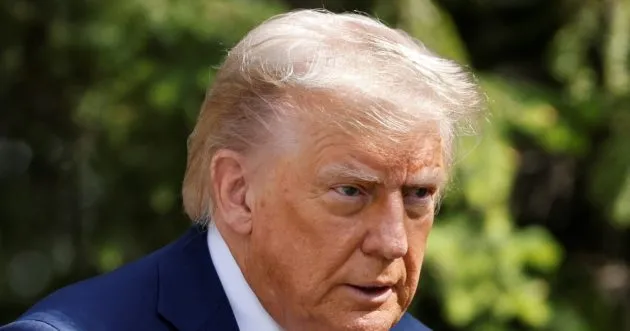
US President Donald Trump stated that the imposition of new sanctions against Russia should be initiated by European countries, not the United States. He emphasized that such restrictions have a significant financial impact on the American economy.
This is reported by Kyiv24
Trump expects action from Europe and a possible peaceful resolution
During a speech with UK Prime Minister Keir Starmer, Trump emphasized:
“Europe talks about it, but they haven’t done it yet. Let’s first see if they will do it. And don’t forget, you know, sanctions cost us a lot of money. When I impose sanctions on a country, it costs us a lot of money, a huge amount of money.”
The US President also noted that implementing sanctions is a complex process that requires significant resources and is not a “one-way street.” According to him, making such decisions involves billions of dollars and has financial consequences for the US.
Trump indicated that he is currently not rushing to impose additional sanctions against the Russian Federation, as he is waiting for a possible agreement to end the war in Ukraine. He emphasized that he is willing to reconsider his position if a relevant agreement is signed.
EU’s position on sanctions against Russia
During the G7 summit, taking place from June 15 to 17 in the town of Kananskis, Canada, leaders of the countries are discussing the possibility of increasing pressure on Russia to achieve a peaceful resolution in Ukraine. Meanwhile, Trump decided to leave the summit early.
The European Commission presented new proposals for the 18th package of sanctions against Russia on June 10. Among them is a reduction of the price cap on oil from $60 to $45 per barrel. EU’s chief diplomat, Kaja Kallas, stated on June 11 that the European Union could implement this initiative even without the participation of the US, which would cause significant damage to the Russian Federation’s economy.
Kallas also emphasized that the main flow of Russian oil supplies to the European Union passes through the Baltic and Black Seas, which are mostly controlled by EU countries. They will be able to ensure monitoring of vessels and cargoes being transported to European ports.