

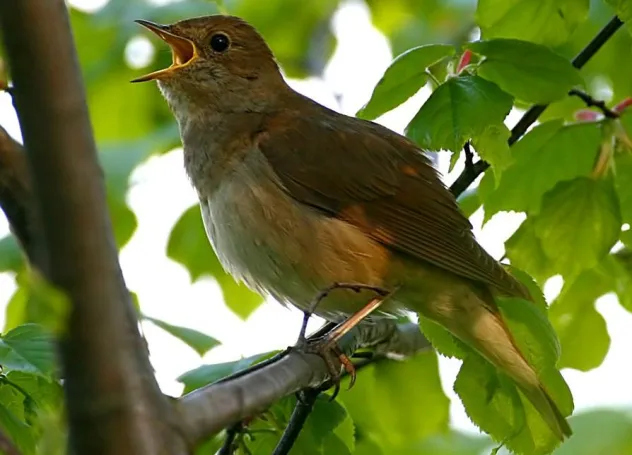
In recent years, residents of Kyiv have noticed that the songs and presence of nightingales have almost vanished from the city’s parks, raising concerns among ecologists and the public. Experts link this issue to the activities of certain municipal enterprises responsible for the maintenance of urban areas, which, according to them, are causing an ecological crisis.
This is reported by Kyiv24
Ecological Impact of Municipal Services
According to the Kyiv Ecological and Cultural Center, the reason for the disappearance of nightingales lies in the fact that these birds build their nests on the ground or very low in bushes. At the same time, in May, the city experiences a so-called “epidemic” of global grass cutting, when workers from “Kyivzelenbud,” KP “Pleso,” and housing maintenance services massively cut grass and mow lawns. This leads to the destruction of nightingale nests, which is a direct manifestation of ecocide.
“The answer is very simple: the fact is that nightingales build their nests on the ground or very low in bushes. But by May, Kyiv is overtaken by an anti-ecological ‘epidemic’ of global grass cutting, when nightingale nests perish under the mowers of workers from ‘Kyivzelenbud,’ KP ‘Pleso,’ and housing maintenance services,” ecologists explain.
In addition to the direct destruction of nests, the systematic mowing of grass has other negative effects. Ecologists emphasize that due to excessive trimming and mowing of lawns, insects— the primary food source for fledglings and chicks of nightingales, sparrows, and many other birds—have almost disappeared from the city. This leads to a decline in their numbers, forcing birds and animals to relocate to more favorable areas in search of food and shelter.
Consequences of Ecological Policy
A significant decrease in the number of insects and birds in Kyiv is a sign of deteriorating ecological conditions, negatively impacting the city’s biodiversity. Thus, systematic and uncontrolled grass mowing becomes not only a reason for the disappearance of nightingales but also a significant ecocide that disrupts the natural balance in urban parks and green spaces.