

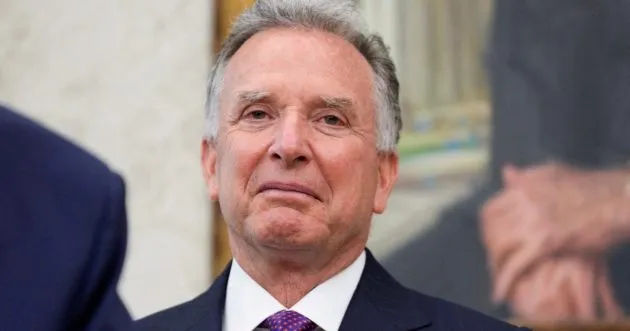
Head of the President’s Office Andriy Yermak, while in Washington as part of the Ukrainian delegation, met with the US Special Representative for Middle East Affairs Steve Witkoff. During the talks, the parties discussed the progress of negotiations between the Ukrainian and Russian delegations in Istanbul.
This is reported by Kyiv24
Ukrainian Position in Negotiations and Appeals to the US
Andriy Yermak emphasized the unconstructive position of the Russian Federation, noting that the Russian side is stalling negotiations and using them to avoid sanctions, with no intention of ceasing hostilities. He also stated that only increased sanctions could compel Russia to engage in serious dialogue. Additionally, Yermak invited Steve Witkoff to visit Ukraine to personally assess the real situation on the ground.
“We discussed the track of negotiations between the Ukrainian and Russian delegations in Istanbul. The position of the Russian Federation is unconstructive. I noted that the Russians are stalling for time and manipulating the negotiations, trying to avoid American sanctions, and do not want to cease fire. Only sanctions can push Russia towards serious negotiations. I also spoke about the real situation on the battlefield. I invited Steve Witkoff to visit Ukraine to see the situation for himself,” Yermak wrote in a Telegram post on the evening of June 3.
Discrepancies in the Ceasefire and Russia’s Demands
The head of the President’s Office emphasized that Ukraine fully supports the US proposal for a ceasefire, which Russia rejects. Kyiv is also ready for a leaders’ meeting, which Moscow is avoiding. Meanwhile, Steve Witkoff, who has visited Moscow multiple times and had talks with Vladimir Putin, has not yet commented on either the meeting or the invitation to visit Ukraine.
The day before, Yermak had a conversation with the US Special Representative for Ukraine, Keith Kellogg, emphasizing the need to increase sanctions pressure on the Russian Federation.
The second round of negotiations between Ukraine and Russia in Istanbul ended without an agreement on a ceasefire. Despite Ukraine’s proposal for an unconditional ceasefire, no response was received from the Russian side. As noted by First Deputy Foreign Minister Serhiy Kyslytsia, Russia continues to reject the idea of a complete ceasefire.
Ukraine insists on an immediate and unconditional cessation of hostilities, which is also supported by the United States. However, the Russian Federation does not agree to these terms. Russian state agencies have disseminated a document containing Moscow’s proposals for a ceasefire, including conducting elections in Kyiv and signing a peace agreement afterward. Among Russia’s demands are the withdrawal of Ukrainian troops from the Zaporizhzhia, Donetsk, Luhansk, and Kherson regions, as well as international recognition of Russian control over these territories and occupied Crimea.
The document also mentions Ukraine’s neutrality, which entails a refusal to join military alliances and a ban on the deployment of foreign troops on its territory. A separate point is the demand to grant the Russian language official status in Ukraine.
US President Donald Trump stated on May 28 that he would provide a response within two weeks regarding whether Vladimir Putin truly seeks to end the war in Ukraine. Meanwhile, Deputy Chairman of the Russian Security Council Dmitry Medvedev emphasized on June 3 that the participation of the Russian delegation in the Istanbul negotiations aims not at achieving peace but at ensuring Russia’s victory in the war.