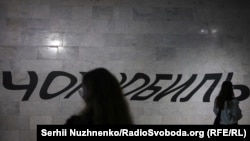


April 26 marks the 40th anniversary of the largest man-made disaster in human history — the accident at the Chernobyl Nuclear Power Plant. On this day in 1986, a powerful explosion occurred at the fourth reactor of the Chernobyl plant, the consequences of which are still felt in Ukraine and around the world.
This is reported by Kyiv24
Chernobyl’s Legacy and Modern Challenges
President Volodymyr Zelensky reminded that significant amounts of radioactive substances were released after the explosion, and hundreds of thousands of people have been struggling with the consequences of the tragedy for decades. A sarcophagus was built to contain the radiation over the destroyed reactor, and later, more than 40 countries joined efforts to construct a new safe confinement. These structures have become a barrier protecting the world from new radiation emissions and large-scale contamination.
“These two structures are what protects against radiation emissions and contamination. Their maintenance and protection are in everyone’s interest. However, through its war, Russia is once again putting the world on the brink of a man-made disaster: Russian-Iranian ‘Shahed’ drones constantly fly over the station, and one of them struck the confinement last year,” the head of state said.
The Threat of Nuclear Terrorism and the Consequences of Attacks
The President emphasized that the global community must not allow the continuation of nuclear terrorism, and the most effective way to achieve this is to force Russia to stop attacks on nuclear facilities. He also expressed gratitude and respect to all those who gave their lives in mitigating the consequences of the disaster and called for preserving the memory of the victims of the tragedy.
The Chernobyl accident occurred on the night of April 26, 1986, at 01:23, when a powerful explosion rocked the fourth reactor, leading to the destruction of part of the reactor block and the turbine hall. The fire that broke out engulfed the roof of the third reactor, and it was extinguished by morning, while the fire in the reactor itself was only brought under control on May 10, when most of the graphite had burned away. The radioactive cloud from the explosion covered not only Ukraine, Belarus, and Russia but also many European countries, including Sweden, Austria, Norway, Germany, Finland, Greece, Romania, Slovenia, Lithuania, and Latvia. According to the international INES scale, the accident received the highest — seventh — level of danger.
In February 2025, the situation at Chernobyl escalated again: on February 14, a Russian strike drone with a high-explosive warhead hit the shelter of the destroyed fourth reactor. The emergency situation was finally resolved only on March 7 of the same year. IAEA experts noted that although the new safe confinement sustained damage and lost some safety functions, the main structures and monitoring systems remained intact.