

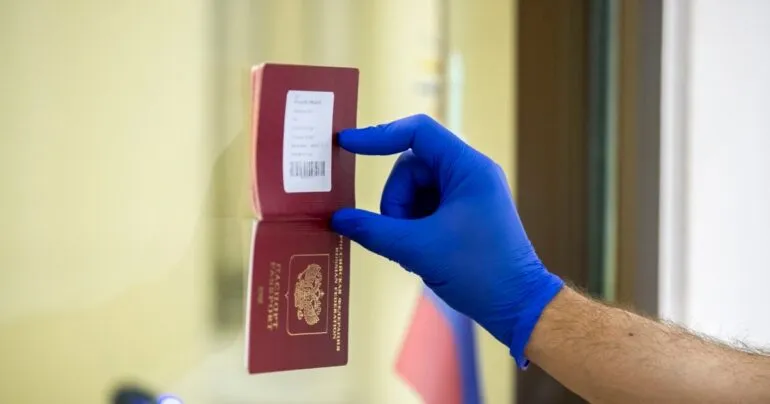
A group of ministers from European Union countries and Schengen Area nations has called on the European Commission to strengthen visa restrictions for Russian citizens and unify approaches to issuing Schengen visas. The corresponding letter was addressed to the EU’s High Representative, Josep Borrell, and the European Commissioner for Home Affairs and Migration, Ylva Johansson. The document was signed by officials from Sweden, the Czech Republic, Denmark, Estonia, Finland, Iceland, Latvia, Lithuania, the Netherlands, Norway, and Poland.
This is reported by Kyiv24
Concerns Over Different Visa Approaches
The letter states that after the suspension of the visa facilitation agreement with Russia in 2022, EU member states still use different standards when issuing visas to citizens of that country. The authors emphasize that this situation causes “visa shopping,” where Russians seek visas from countries with less stringent requirements.
“There is deep concern over the increasing number of Russian tourists enjoying vacations on European beaches and resorts while rockets and drones continue to strike civilian and civilian infrastructure in Ukraine. This is even more outrageous against the backdrop of thousands of illegally deported and forcibly displaced Ukrainian children who cannot return to their families,” the letter states.
The ministers also stress that the lack of a unified approach creates security risks for the entire Schengen Area, particularly because “easy access to the Schengen Area increases potential security risks, including those related to the movement of hundreds of thousands of Russian military personnel who participated in the war of aggression against Ukraine.”
Increase in Issued Visas and Need for Legislative Changes
According to the “Schengen Barometer,” in 2025, Russian citizens were issued 477,878 Schengen visas for tourist trips, a significant portion of which were multiple-entry visas. The most visas were issued in France, Italy, and Spain, and the total issuance in 2025 increased by 10.6% compared to 2024.
European diplomats note that currently, only recommendations from the European Commission regarding tightening the visa issuance procedure for Russian citizens are in effect in the EU, which are not mandatory. This leads to differences in approaches among various countries.
In their appeal, the ministers urge the European Commission to develop legislative changes at the EU level that would allow for the effective implementation of visa restrictions or even a complete ban on issuing visas to citizens of the aggressor country. The authors emphasize that “restrictive visa policy towards Russian citizens is necessary to protect the security and integrity of the Schengen Area,” and the lack of unity on this issue could undermine the effectiveness of the EU’s pressure on Russia.