

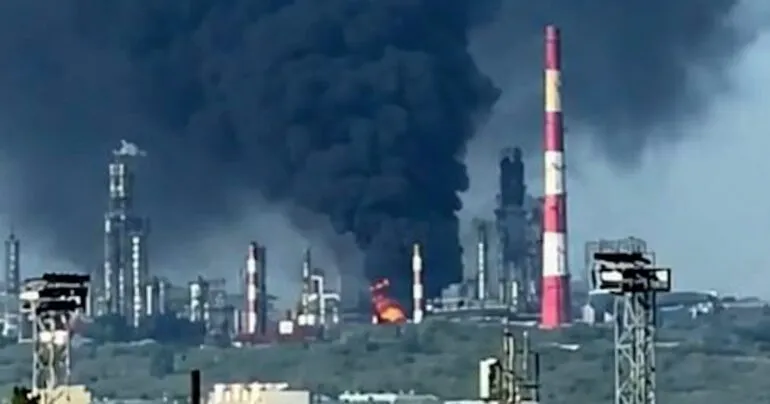
In May 2026, the number of Ukrainian drone attacks on the oil infrastructure of the Russian Federation reached a record level. Throughout the month, there were at least 30 strikes on Russian oil refineries — the highest number since the beginning of the full-scale war.
This is reported by Kyiv24
Significant Decrease in Oil Refining Volumes
As a result of the mass attacks, 16 oil refineries were affected, including eight of the ten largest enterprises in the country. Some facilities were attacked multiple times, complicating the restoration of production capacities. Thus, Russia was unable to take advantage of the rising global oil prices amid the military conflict with Iran.
According to analysts at OilX, in May, oil refining volumes in Russia decreased to 4.58 million barrels per day. This is 13% lower than the same period last year and is the lowest figure since autumn 2009.
Attack Strategy and Consequences for Russia
As analyst Sergey Vakulenko notes, Ukraine has expanded its list of targets, striking not only the main installations but also secondary facilities, terminals, and pumping stations, which are harder to restore due to international sanctions.
“Ukraine’s attacks on Russian oil refineries set a record in May, prompting Moscow to ban the export of aviation fuel and threatening to further harm refining, which is now at its lowest level in 16 years.”
Despite this, experts note that a serious fuel crisis in Russia is still a long way off. Since the beginning of the year, retail gasoline prices have risen by more than 2 rubles, and fuel sale restrictions have only been implemented in Crimea.
Since the start of the full-scale war, Russian territory has regularly faced airstrikes. The Ukrainian General Staff has repeatedly confirmed such operations, emphasizing that these actions are aimed at reducing the combat potential of Russian occupation forces and forcing Russia to cease its aggression against Ukraine.