
Hungary has suspended the provision of a European Union loan for Ukraine amounting to 90 billion euros. This decision pertains to a financial support package that was agreed upon at the European Council meeting in Brussels in December 2025 and officially presented by the European Commission in January 2026.
This is reported by Kyiv24
Hungary’s Position and Justification for the Blockade
On the evening of January 20, Hungarian Foreign Minister Peter Szijjarto confirmed the blockade of financial assistance. According to him, Budapest will not support the loan for Ukraine until oil transit to Hungary via the Druzhba pipeline is restored. The minister accused Ukraine of blackmail and violating the Association Agreement with the EU, claiming that Kyiv is colluding with Brussels and the Hungarian opposition to create disruptions in oil supply and raise fuel prices ahead of parliamentary elections.
“We are blocking the EU loan for Ukraine of 90 billion euros until oil transit to Hungary via the Druzhba pipeline is restored. Ukraine is blackmailing Hungary by halting oil transit, coordinating this with Brussels and the Hungarian opposition to create supply disruptions in Hungary and raise fuel prices before the elections. By blocking oil transit to Hungary through the Druzhba pipeline, Ukraine is violating the Association Agreement between the EU and Ukraine and its obligations to the European Union.”
Procedural Nuances and Political Context
Budapest refused to support one of the three key documents necessary for the allocation of the loan — amendments to the EU’s long-term budget for 2021–2027. To approve the financial assistance package, three regulations must be adopted: on the establishment of a support loan for Ukraine for 2026–2027, amendments to the Ukraine Facility, and changes to the EU’s multiannual financial framework. The first two documents can be adopted by a qualified majority of votes; however, the third requires unanimous support from all EU member states.
This is the document that Hungary blocked on February 20. During the previous approval of the loan in December 2025, Hungary, along with Slovakia and the Czech Republic, insisted that it would not bear financial responsibility for this loan.
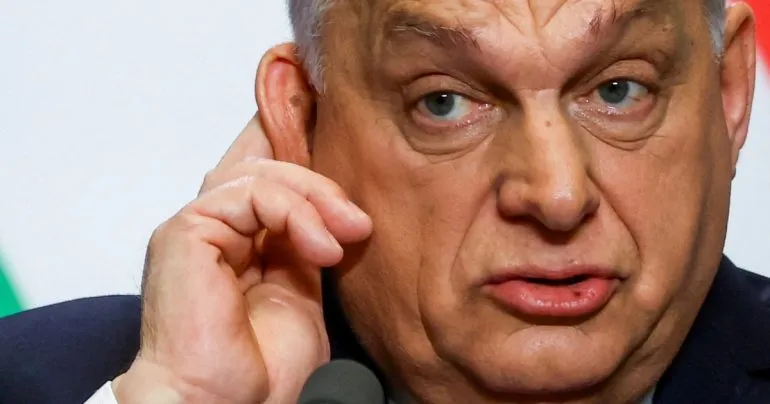
The blockade of financial assistance occurs against the backdrop of preparations for parliamentary elections in Hungary, scheduled for April 12, 2026. Polls indicate that the opposition party Tisza, led by Peter Madjar, is ahead of the ruling party Fidesz of current Prime Minister Viktor Orban by approximately 10 percentage points.