

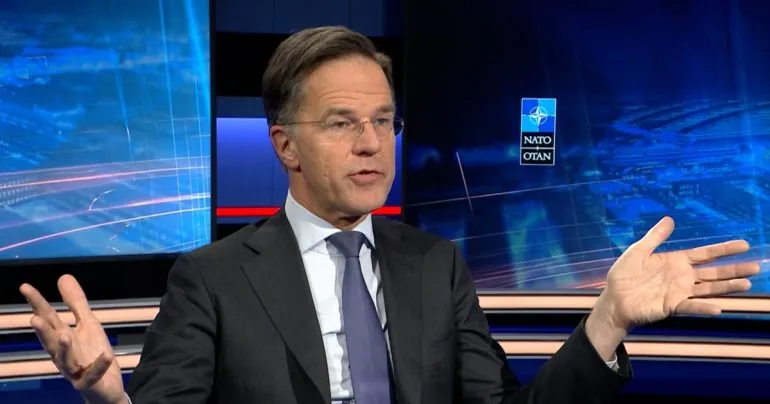
NATO Secretary General Mark Rutte has commented for the first time on the U.S. peace plan developed with the involvement of former President Donald Trump, which is currently being actively discussed between Kyiv and Washington. In his interview, he noted that the proposed 28 points have helped Ukraine and the U.S. align their positions, although some parts of the document require further refinement.
This is reported by Kyiv24
Details of the Negotiations and Assessment of the Plan
Mark Rutte emphasized that the main goal of the plan was to stimulate constructive dialogue between the parties. According to him, the meeting of the Ukrainian and American delegations that took place the day before was successful thanks to this initiative. The NATO Secretary General declined to go into details about the negotiations in Geneva, stating that it is not appropriate to comment on each point of the document while discussions are ongoing.
“Of course, there is still a lot of work ahead, but yesterday’s meeting of the Ukrainian and American teams was very successful. And it was based on this plan. I will not analyze each line of it. However, clearly, as a foundation, it achieved its goal yesterday – to encourage both sides to engage in genuine dialogue,” said Mark Rutte.
The Position of the U.S., Ukraine, and Reaction to the Plan
Rutte stressed that negotiations between the U.S. and Ukraine are ongoing, and the ultimate goal remains to achieve full sovereignty and security for Ukraine, which will never again be threatened by an attack from Russia. He also added that he had spoken with the U.S. President to ensure the negotiations start from the best positions, although he did not disclose details of that conversation.
It is known that information about the existence of the 28-point plan emerged in the media last week. Later, the U.S. officially confirmed the development of the peace initiative, although its authenticity remained in question. Some American media and congress members suggested that representatives of the Russian Federation might have been involved in the development of the document, but this was categorically denied by the State Department. They emphasized that the plan was created exclusively in the U.S. and takes into account proposals from both Russia and Ukraine.
The Geneva meeting involving delegations from the U.S., Ukraine, the EU, and leading European states was aimed at discussing contentious points of the plan, including possible territorial concessions to Russia, limitations on the size of the Ukrainian army, and Ukraine’s potential renunciation of NATO membership. These issues raise concerns both in Kyiv and among European Union countries.