
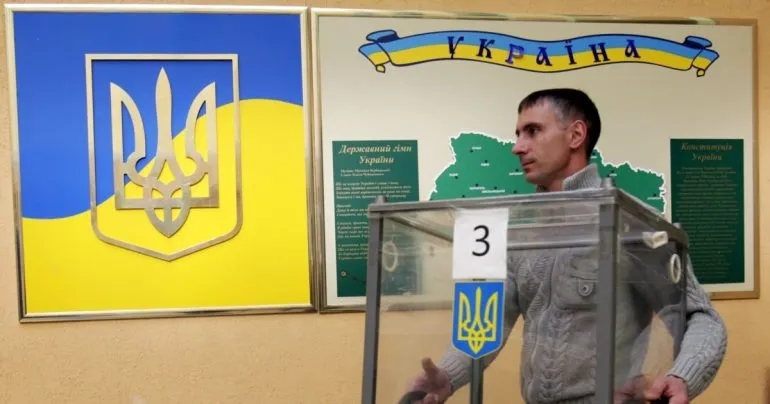
The head of the Central Election Commission of Ukraine, Oleg Didenko, believes that it is advisable to adopt a separate law for conducting elections after the war, which would regulate special procedures different from the usual electoral processes during peacetime. He stated this in an interview with an information agency.
This is reported by Kyiv24
“In my opinion, it is more appropriate to approve a separate law that will regulate the specifics of conducting post-war elections – establishing these specific procedures and aspects that are not characteristic of elections in peacetime,” Didenko said.
Issues of Organizing Elections After the War
According to Oleg Didenko, separate regulation is also needed to define the criteria that enable or prevent elections in certain territories. Didenko emphasized that this issue should also be enshrined in a special law. He reminded that the relevant draft law was prepared by the CEC back in 2022 and proposed for consideration by the parliament. Subsequently, international partners were involved in the preparation of the draft law, but the document has not yet been registered in the Verkhovna Rada.
The head of the CEC stressed that due to the war, many populated areas in Ukraine have suffered significant destruction or have been left practically without residents. This raises doubts about the advisability of conducting elections in such regions, and relevant issues must be resolved at the legislative level.
Work on the Draft Law and Key Challenges
On December 22, a working group was established to develop a draft law regarding elections during martial law, and its first meeting took place on December 26, chaired by the first deputy head of the Verkhovna Rada, Oleksandr Korniienko. The group consists of 64 participants, including representatives from the parliament, the president’s office, the government, military structures, the CEC, public organizations, the Supreme Court, and experts. The next meeting is scheduled for the first half of January, no later than January 9.
The head of the Verkhovna Rada, Ruslan Stefanchuk, reported that the working group is addressing all the nuances of applying the Electoral Code under wartime conditions. Among the main issues are organizing voting for military personnel, ensuring the voting rights of Ukrainians abroad, conducting elections in temporarily occupied territories, and the participation of international observers. He emphasized that the law on elections during martial law will be of a one-time nature.
In December 2025, U.S. President Donald Trump reiterated the need for presidential elections in Ukraine, noting that the Ukrainian authorities allegedly use the war to avoid elections. In response, Ukrainian President Volodymyr Zelensky confirmed readiness for elections and called on the U.S. to help ensure security during their conduct. Subsequently, Zelensky held consultations with representatives of the Verkhovna Rada regarding the possibility of holding elections during martial law.
Previously, Trump had also called for elections to be held in Ukraine, while Russian officials, including Vladimir Putin, have repeatedly made unfounded claims regarding the legitimacy of the Ukrainian authorities due to the lack of elections in 2024.
At the same time, during a press conference in Moscow on December 19, Putin stated that Russia is ready to “consider” security guarantees in the event of elections in Ukraine, including refraining from strikes on the country’s territory on election day. However, he emphasized that there is no need for a ceasefire to conduct elections, as Russia has already held elections during wartime without a truce.
According to Ukrainian legislation, during the period of martial law, which was introduced on February 24, 2022, conducting elections is prohibited.