

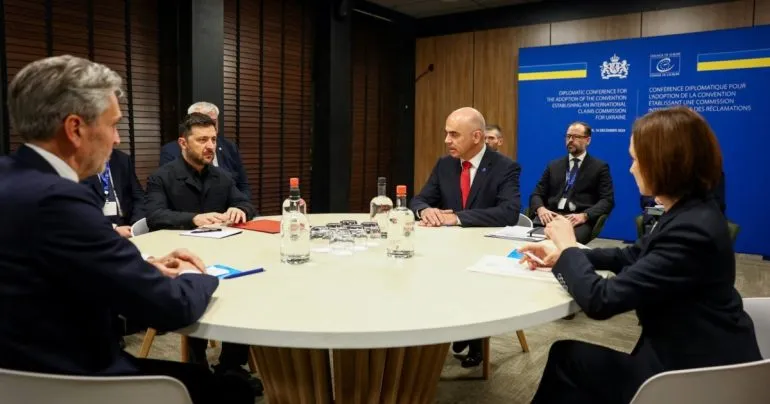
The Compensation Commission has officially commenced its activities in The Hague, with the primary task of determining the amount of reparations for Ukrainian citizens affected by the full-scale war initiated by Russia. The launch ceremony was attended by representatives from around 50 countries, including Ukrainian President Volodymyr Zelensky and Dutch Prime Minister Dick Schoof.
This is reported by Kyiv24
International Support and Legal Approach
During the event, Secretary General of the Council of Europe, Alain Berset, emphasized the role of international law in holding aggressors accountable and in providing fair compensation for the damage caused.
“The Council of Europe does not have drones or missiles, but it has the power of law. International law that applies to everyone. Without exceptions. Without double standards. And our task is clear: to establish the truth, ensure compensation, and hold all responsible parties accountable.”
Dutch Prime Minister Dick Schoof noted that the issue of funding sources for reparations will be addressed in the next stages and will be part of peace agreements. He emphasized that negotiations on post-war reparations are a common practice, but it is essential to achieve sustainable peace first.
EU official Kaja Kallas highlighted that one of the main sources for filling the compensation fund should be frozen Russian assets. In her view, “it is unthinkable that these funds would ever be returned” to Russia. The possibility of using revenues from Russian oil exports is also being considered, particularly in the event of a partial easing of sanctions in exchange for directing part of these funds towards compensations for Ukraine.
Stages of Creating the Payment Mechanism
The Compensation Commission is the second stage of the international mechanism aimed at ensuring fair compensation for Ukrainians. The first step was the establishment of the Register of Damages, which has been accepting applications from individuals and state bodies in Ukraine for nearly two years — approximately 84,000 applications have been received so far. The next step will be the creation of a compensation fund, which, according to the Council of Europe, may take about another year and a half to launch.
Ukrainian President Volodymyr Zelensky called on the international community to ensure the real functioning of all established compensation mechanisms, emphasizing the importance of strong international support for actual payments to affected Ukrainians. He also noted that the war and Russia’s accountability must serve as an example to safeguard the world from a recurrence of similar aggression.
Diplomats from the Council of Europe urge Ukrainians to actively submit applications to the Register of Damages, as documenting losses is a key condition for future compensation. Although the payment process may take years, documenting the damage is already considered a crucial step for obtaining reparations in the future.