

The Kremlin is ramping up its efforts in cognitive operations aimed at influencing the United States’ position on the war in Ukraine. The main goal of these actions is to achieve decisions favorable to the Russian Federation and to shift the blame for the lack of negotiations onto Washington.
This is reported by Kyiv24
Kremlin Escalates Rhetoric Against the U.S. and Trump
Experts estimate that Russian officials and key figures in the Russian information space are increasingly openly accusing U.S. President Donald Trump of blocking peace negotiations regarding Ukraine. They refuse to make concessions that Moscow has long demanded and promote narratives that the U.S. position is the obstacle to ending the war.
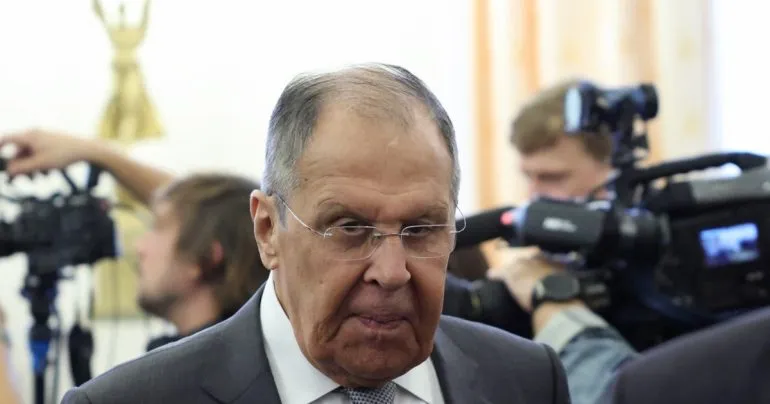
Analysts have paid particular attention to an interview with Russian Foreign Minister Sergey Lavrov on the Hungarian YouTube channel Ultrahang. In it, Lavrov stated that the Kremlin is ready to cooperate with the U.S. to end the war based on prior discussions before the summit in Alaska in August 2025. At the same time, he accused the Trump administration of refusing dialogue, noting:
“Russian President Vladimir Putin remains open to meeting with Trump, but the Kremlin will wait for an initiative from Washington regarding further negotiations.”
Experts emphasize that such statements are aimed at portraying Russia as a party willing to engage in dialogue while blaming the West for its unwillingness to seek compromises. Furthermore, Lavrov used the interview to disseminate standard Russian information themes: stirring up contradictions between the U.S. and Europe, attempts to deprive Ukraine of support from Western partners, and accusations against European countries of pressuring the Trump administration.
Manipulations Surrounding Ceasefire and Territorial Claims
According to analysts’ observations, other representatives of the Russian authorities and commentators are also echoing similar narratives, directly criticizing Trump. In particular, Alexey Chepa, the first deputy chairman of the State Duma Committee on International Affairs, stated that Russia would agree to a ceasefire only if the West stops supplying weapons to Ukraine and Ukrainian troops withdraw from the Luhansk, Donetsk, Kherson, and Zaporizhzhia regions. These conditions essentially repeat Russia’s maximalist demands for ending the war.
Analysts note that Kremlin officials have recently rejected the ceasefire proposed by Trump, consistently reaffirming their commitment to Russia’s initial military objectives. At the same time, they are trying to convince the domestic audience that the refusal to compromise is due to the actions of the U.S. and the West.
The report also highlights that Russia’s persistent claims to the entirety of the Zaporizhzhia and Kherson regions undermine any proposals for partial territorial transfers. Constant references to Odesa as a “Russian” city indicate broader territorial ambitions of Russia beyond the four illegally annexed regions.
The Institute for the Study of War has repeatedly emphasized that the Kremlin demonstrates a lack of genuine desire to engage in good-faith negotiations to end the war against Ukraine, instead attempting to shift the blame for the lack of progress onto the EU and the West, despite Russia’s refusal to abandon its maximalist demands.
On October 22, U.S. President Donald Trump announced the cancellation of a meeting with Vladimir Putin in Budapest, explaining: “It just didn’t feel right to me. There was no sense that we would achieve what we needed to achieve. So I canceled it, but we will do it in the future,” he said.
In response to questions from journalists, Trump also stated that it is time to strengthen sanctions against Russia. Shortly before this, the U.S. Department of the Treasury announced new sanctions against “Rosneft,” “Lukoil,” and related companies.