

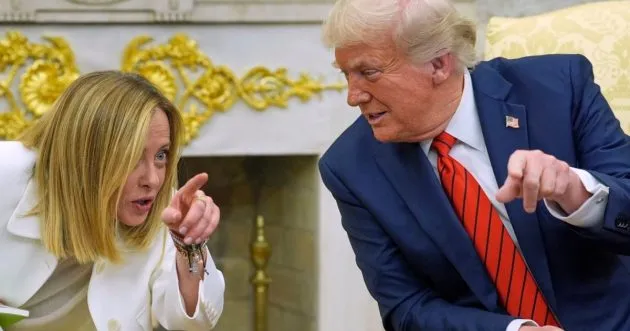
Ukraine has openly expressed its readiness for an unconditional ceasefire, while the Russian Federation offers a three-day truce, which is considered insufficient for achieving a just and lasting peace. This has led to increased international tension and discussions regarding the further development of the situation at the front.
This is reported by Kyiv24
Reactions from Ukraine and World Leaders
Italian Prime Minister Giorgia Meloni emphasized in an interview with Corriere della Sera that Ukraine supports efforts for an unconditional ceasefire. She stated that
“Right now we support the efforts of (U.S. President Donald) Trump and are pleased that (Ukrainian President Volodymyr) Zelensky has declared that he is open to an unconditional ceasefire, showing that Ukraine also wants peace. Now it is Russia’s turn to prove the same. Because the three-day ceasefire announced by Putin on the anniversary of Victory in World War II is another matter, and clearly insufficient. Peace must be just and lasting. This means, first and foremost, reliable security guarantees. Italy has long made its proposal: we need a solution inspired by Article 5 of the Washington Treaty, even outside the NATO Treaty.”
.
Announcement of the Ceasefire and International Response
On April 28, the Kremlin announced that Russian President Vladimir Putin proclaimed a ceasefire on the days of the 80th anniversary of Victory – May 8, 9, and 10. At the same time, Ukrainian President Volodymyr Zelensky emphasized that Ukraine supports the U.S. idea of a ceasefire and also proposed a 30-day pause. He called Putin’s statement “another attempt at manipulation” and urged for an immediate and unconditional ceasefire to prevent further casualties and ensure real diplomacy.
Following Russia’s announcement of a ceasefire for a few days in May, the White House expressed support for the idea of a permanent ceasefire. This was reported by White House spokesperson Caroline Levitt at a press conference on April 28, emphasizing the importance of long-term peaceful solutions.