

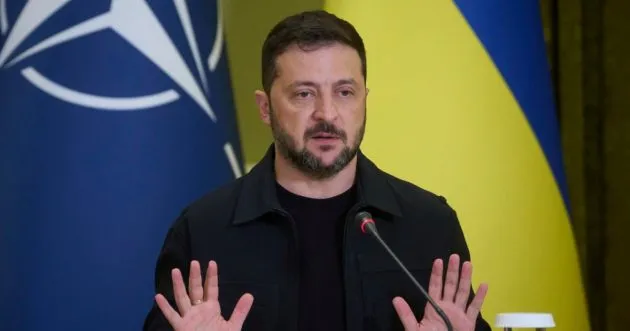
The issue of security guarantees for Ukraine, particularly in the Black Sea region, is actively being discussed at the international level. President Volodymyr Zelensky, during a joint press conference with NATO Secretary General Mark Rutte, reported that the formats for involving different countries in the guarantees are still under discussion. According to Zelensky, support may be provided in the form of military assistance, intelligence, funding, or participation in demining efforts.
This is reported by Kyiv24
Turkey and Its Role in Ensuring Maritime Security
The president paid special attention to Turkey’s initiative. The country has expressed its readiness to join the security guarantees specifically in the Black Sea, emphasizing its professionalism and experience in the relevant field. Zelensky stressed that the Turkish side intends to ensure its full presence in the region to support Ukraine.
“Who, for example, like Turkey, which stated at the last meeting of our ‘coalition of the willing’: we want to be part of the security guarantees for Ukraine in terms of the sea. We are professionals, we know how to help in the Black Sea, we will focus on this, our presence there will be complete,” said the president.
Zelensky added that a comprehensive infrastructure for security guarantees is currently being formed. In the future, it will be determined who exactly, how, and in what way can assist Ukraine.
International Support and Principles of Guarantees
Security guarantees for Kyiv remain a key element of efforts to end the war. The activation of discussions on this topic occurred following meetings between Volodymyr Zelensky and U.S. President Donald Trump, as well as European leaders in Washington.
Within the so-called Coalition of the Willing, the United Kingdom proposed to deploy Typhoon fighters in western Ukraine and send a brigade of 3,000–5,000 troops to train Ukrainian soldiers. France, Canada, Australia, Lithuania, and the Czech Republic also expressed their support in the form of possible troop contributions for missions in Ukraine.
European leaders issued a joint statement emphasizing that any future peace agreement should not limit the Armed Forces of Ukraine or its international cooperation. Furthermore, Russia will not have a veto right regarding Ukraine’s Euro-Atlantic integration or its accession to NATO.